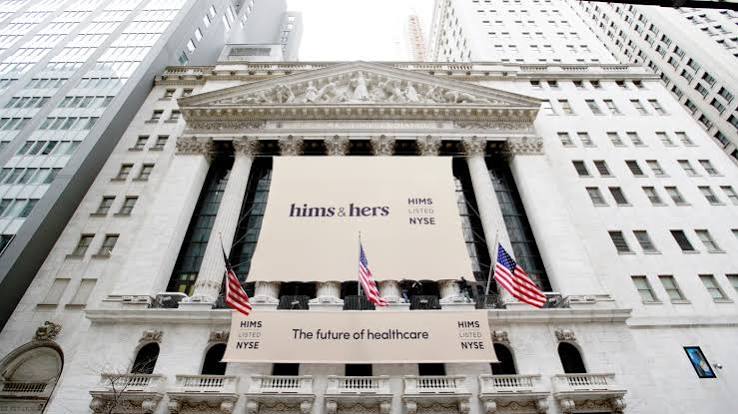
The obvious read on HIMS stock — up roughly 67% in the second quarter alone — is that Wall Street is bullish. The numbers say the opposite. Hims & Hers Health trades near $37.36 as of July 1, 2026 (Benzinga), yet the 13-analyst average price target sits at just $28.35–$30.14, per TipRanks and Stock Analysis — roughly 20% below where the stock already trades. The bull case is Canaccord Genuity’s freshly raised $40 target; the bear case is the street low at $21, a 44% drawdown from here. And the referee arrives in days: the FDA’s Peptide Compounding Advisory Committee meets July 23–24 with a formal recommendation against compounding certain peptides already on the table.
Having built this bull/bear series across the year’s most divisive tickers, HIMS is structurally unlike any of them — and that is the insight the price-target spread hides. When we mapped IREN’s $105 bull case against its $46 bear case, the market price sat below the most pessimistic analyst on Wall Street; in APLD’s standoff, even the $40 bear case cleared the $28 price. HIMS inverts the setup: this is the rare momentum name where the market has already outrun the street’s average, and the analysts are upgrading from behind — Canaccord lifted its target 25% ($32 to $40) and BofA Securities jumped from $25 to $36 in the same wave. Either the street’s models are stale against a business whose sales growth accelerated from mid-single digits in April to high-teens by June, or the market is paying August-earnings prices in July. Both cannot be true past the FDA meeting.
Key Facts:
- • HIMS trades near $37.36 (July 1, 2026), after gaining roughly 67% in Q2 2026 — Benzinga
- • Bull case: $40 — Canaccord Genuity’s Maria Ripps, raised from $32 with a Buy rating (July 2026) — Benzinga
- • Bear case: $21 — the lowest of 13 Wall Street targets; the average sits at $28.35–$30.14, below the market price — TipRanks, Stock Analysis
- • BofA Securities raised its target from $25 to $36 but kept a Neutral rating (Allen Lutz) — Benzinga
- • The FDA’s Peptide Compounding Advisory Committee (PCAC) reviews seven peptides on July 23–24, 2026, with the agency formally recommending against permitting compounding of certain peptides — Benzinga
- • A Novo Nordisk executive described Hims as one of the drugmaker’s most “voluminous” telehealth partners — Benzinga
- • Sales growth accelerated from mid-single digits in April to high-teens by June; generic semaglutide launched in Canada in late May and the Eucalyptus acquisition closed in early June — Benzinga
What’s actually happening: a telehealth stock repricing in real time
The 67% second-quarter move was not a meme squeeze; it tracked a sequence of operating catalysts. In late May, Hims launched generic semaglutide in Canada — first-mover access to the biggest weight-loss molecule in a market where the patent picture allows it. In early June, the company closed its acquisition of Eucalyptus, the Australian digital-health group, extending the platform internationally. Through the same stretch, monthly sales growth accelerated from mid-single digits in April to high-teens by June, per the channel work behind BofA’s upgrade. The market’s read: the ugly chapter — the compounded-GLP-1 controversy that defined 2025 — is giving way to a branded, partnered, international growth story.
The pivot matters because of what it replaces. Hims built its weight-loss business on compounded semaglutide sold at a fraction of branded prices, a model that put it in open conflict with Novo Nordisk and squarely in the FDA’s sights. The new model is distribution partnership: selling branded and authorised products through the same subscriber funnel — more durable, lower margin, and far less legally flammable. It is the same playbook shift we tracked in the SERV bull/bear breakdown: when a story stock swaps its most controversial revenue line for a partnership model, the multiple debate resets from “is this legal?” to “what is it worth?”.
“The company’s transition away from compounded weight loss drugs toward branded alternatives is gaining traction,” said Maria Ripps, Analyst at Canaccord Genuity, who also flagged that a Novo Nordisk executive recently described Hims as one of the pharmaceutical giant’s most “voluminous” telehealth partners. (Benzinga)
Quick Take: HIMS at ~$37 has already priced the turnaround the average analyst hasn’t modelled. The bull case ($40, Canaccord) is 7% away; the bear case ($21, street low) is 44% away. Two dates decide which target gets re-marked first: the FDA’s peptide committee on July 23–24 and Q2 earnings in early August. Until then, every dollar above the $28–$30 consensus is a bet that the April-to-June sales acceleration is durable rather than launch-driven.
Industry response: partners lean in, the street stays on hold
The most consequential response is Novo Nordisk’s. A year after publicly severing its collaboration over compounding, the Danish drugmaker’s executives now talk about Hims as a top-volume telehealth channel — an endorsement that converts the company from adversary of pharma into distribution rail for it. Eli Lilly’s direct-to-consumer LillyDirect remains the structural counterweight: the bear reading of pharma’s posture is that manufacturers tolerate telehealth intermediaries only until their own channels scale.
Wall Street’s response is stranger, and it is the heart of this bull/bear case. Of the 13 covering analysts, the overwhelming majority sit at Hold, and the consensus target of $28–$30 implies double-digit downside — yet the two most recent target changes were both upgrades of 25% or more. That combination (average below price, marginal analyst racing upward) is the statistical signature of a street being dragged into a story it doesn’t yet model. Retail, meanwhile, has no such hesitation: the bull thesis dominating investor YouTube frames the company as healthcare’s platform consolidator. “Hims & Hers has an opportunity to be the aggregator in healthcare, serving tens of millions of customers,” argued Travis Hoium, investor and host at Asymmetric Investing, in a July analysis of his largest holding. (Asymmetric Investing) The counter-signal also lives in public forums: customer complaints about subscription billing practices — sign-up charges without provider contact — recur across community threads, a churn-and-trust risk no price target captures.
The numbers: $40 bull, $21 bear, and a market price above the average
| Scenario | Target | vs $37.36 price | Anchor |
|---|---|---|---|
| Bull case | $40 | +7% | Canaccord (Ripps, Buy) — branded transition + Novo volume |
| BofA case | $36 | −4% | Raised from $25, Neutral — growth acknowledged, valuation full |
| Street average | $28.35–$30.14 | −20% to −24% | 13 analysts, majority Hold |
| Bear case | $21 | −44% | Street low — FDA compounding risk + churn + competition |
Sources: Benzinga (July 1, 2026); TipRanks and Stock Analysis consensus data (July 10, 2026). Table compiled July 17, 2026.
The synthesis across our bull/bear series makes the setup legible. On OKLO’s $140-versus-$14 split, the argument was about a pre-revenue reactor; on PLTR’s $382-versus-$70 spread, about what multiple 85% growth deserves. HIMS is the only name in the series where the bull case is single-digit percent away — $40 is just 7% above spot — while the bear case is a 44% fall. That is an asymmetric risk profile pointing the wrong way for momentum buyers: the upside to the most optimistic published target is smaller than the downside to the consensus, let alone the low. For the bulls to be right at these prices, the street’s August model refresh — Q2 earnings land early in the month — has to blow through $40, which is precisely what an April-to-June acceleration from mid-single to high-teens growth would justify if it holds.
There is a second way to read the same table, and it is the one the trading community has adopted: price leads targets in accelerating stories, and targets are a lagging indicator by construction. CoreWeave’s $303-versus-$36 spread looked equally irrational against its consensus until consecutive quarters forced the entire curve upward. The technical picture supports the patience trade for now — the stock’s June breakout from the mid-$30s has held on every pullback through mid-July, per trader commentary across retail forums — but technicals borrowed from AI-infrastructure momentum names carry a warning here: HIMS is a consumer-subscription business walking into a binary regulatory date, not a datacentre with contracted backlog. The comparable that disciplines the bull case is not CoreWeave; it is every telehealth name that traded at platform multiples until a regulator reminded the market it was a healthcare company.
The regulatory event: July 23–24 is the binary
The history explains the stakes. Hims’s compounded-semaglutide business was born in the branded shortage era: when the FDA listed semaglutide as in shortage, compounding pharmacies could legally produce versions, and Hims scaled the cheapest large-scale channel for them. When the agency declared the shortage resolved in early 2025, that legal foundation dissolved — the wind-down that followed cost the company its first Novo Nordisk collaboration and defined the stock’s 2025 drawdown. The current peptide review is the same regulatory machinery pointed at the adjacent product set, which is why the market treats a committee calendar entry as a price catalyst.
Six days from publication, the FDA’s Peptide Compounding Advisory Committee takes up seven peptides, with the agency having formally recommended against permitting compounding pharmacies to manufacture certain of them. The tension is the classic innovation-versus-safety push-pull: compounders and telehealth platforms argue peptide access serves patients the branded pipeline ignores; the FDA argues unapproved manufacture at scale is a safety regime with no referee. For Hims, the direct revenue exposure is the compounding tail the company has spent a year shrinking — but the second-order exposure is narrative. A hostile committee outcome re-attaches the “regulatory target” discount the branded pivot was meant to remove; a benign one validates the de-risking and hands the bulls their August setup. Note the asymmetry created by the transition itself: every month of branded mix shift makes the FDA’s compounding posture matter less to revenue and more to sentiment alone.
What happens next: three scenarios into August earnings
Scenario one — the acceleration is real (bull, roughly Canaccord’s $40 and beyond). If Q2 earnings in early August confirm high-teens exit growth with the branded mix expanding, the street’s $28–$30 average is unpayable and targets migrate towards $40-plus; the causal chain is analyst models catching up to disclosed run-rates, the same dynamic that has kept upgrades trailing price all quarter.
Scenario two — the FDA reframes the story (bear, towards $21). A sharply negative PCAC outcome on July 23–24, or any signal that regulators view telehealth GLP-1 channels as the next enforcement frontier, restores the 2025 discount. The stock’s 67% quarter offers a large profit-taking cushion, and a Hold-heavy street will not defend a valuation its own averages call 20% too high.
Scenario three — the grind (base). A muddled committee outcome and in-line earnings leave HIMS oscillating between the BofA $36 and the consensus $30 — a stock that has to keep proving acceleration every 90 days because its price already assumes it. On the current calendar, the July 23–24 committee is the near-term coin flip and August earnings the settlement date; expect the $40 and $21 book-ends to be re-marked within three weeks of both. Whichever way it breaks, HIMS stock has become the cleanest live experiment in how far a consumer-health multiple can run ahead of the analysts paid to model it — and the answer arrives on a published schedule.
FAQ
What is the bull case for HIMS stock?
$40 — Canaccord Genuity’s target, raised from $32 in July 2026, resting on the branded weight-loss transition, Novo Nordisk calling Hims one of its most “voluminous” telehealth partners, and sales growth accelerating from mid-single digits in April to high-teens by June.
What is the bear case for HIMS stock?
$21, the lowest Wall Street target — roughly 44% below the July price. It rests on FDA compounding risk (PCAC review July 23–24), a Hold-majority street whose $28–$30 average target is already below the market price, subscription-churn complaints, and Eli Lilly’s direct-to-consumer competition.
Why did HIMS stock go up 67% in Q2 2026?
A run of operating catalysts: generic semaglutide launched in Canada in late May, the Eucalyptus acquisition closed in early June, monthly sales growth accelerated through the quarter, and analysts began raising targets — Canaccord to $40 and BofA Securities from $25 to $36.
What happens at the FDA meeting on July 23–24?
The Peptide Compounding Advisory Committee reviews seven peptides, with the FDA formally recommending against permitting compounding pharmacies to manufacture certain of them. The outcome shapes how much regulatory discount telehealth compounding channels carry, even as Hims shifts revenue to branded products.
What is the HIMS analyst price target for 2026?
The 13-analyst average is $28.35–$30.14 with a $40 high and $21 low, per TipRanks and Stock Analysis (July 10, 2026) — an average that sits roughly 20% below the ~$37 market price, with the majority of the street at Hold.
Who are Hims & Hers’ main competitors?
Eli Lilly’s direct-to-consumer LillyDirect channel is the structural threat, since it removes the manufacturer’s need for telehealth intermediaries. Ro competes directly across weight loss and men’s health subscriptions, while Teladoc anchors the employer-channel alternative. The Novo Nordisk partnership is Hims’ current moat against exactly this set — and its dependency.
Is HIMS stock overvalued after the run?
The street’s average says yes; the marginal upgrade says not yet. The honest frame: the bull target offers ~7% upside while the bear target implies 44% downside — an asymmetry that makes the August earnings print, not the price targets, the real arbiter.